№ 04 · ATLAS · THE FIGURES
CANON · KERNEL V9 · ARCHITECTURE V6.1
The system, drawn.
The canonical Kernel v9 loop, the Architecture v6.1 ten-layer stack, and the planning tier. These are governed design contracts, not a claim that every target service is deployed today.
CANON · KERNEL V9
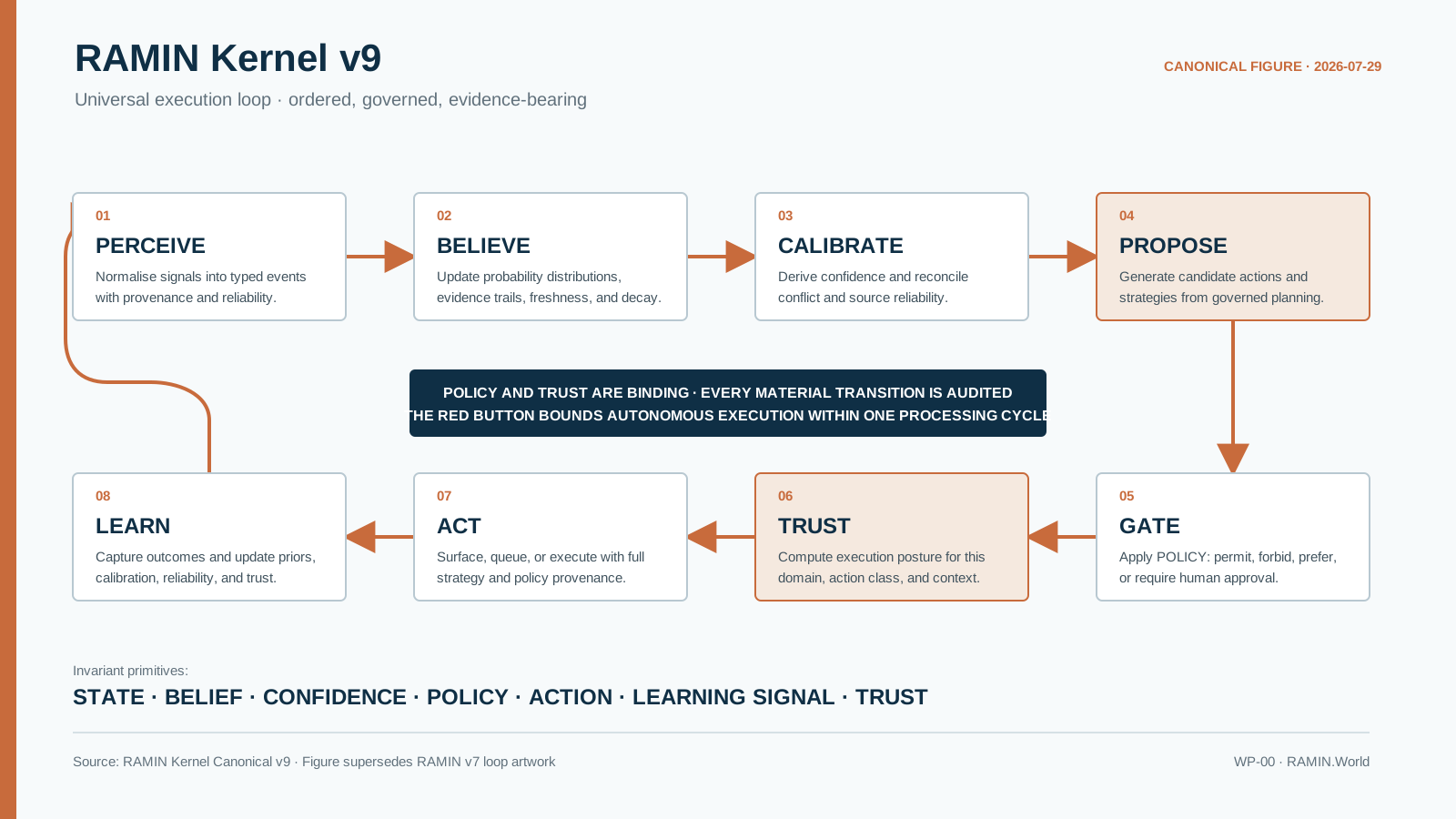
The execution loop. Eight phases, no shortcuts.
BELIEF, CONFIDENCE, POLICY, and TRUST are explicit runtime stages. They are what separates RAMIN from a generic sense-decide-act agent loop.
CANON · TARGET ARCHITECTURE
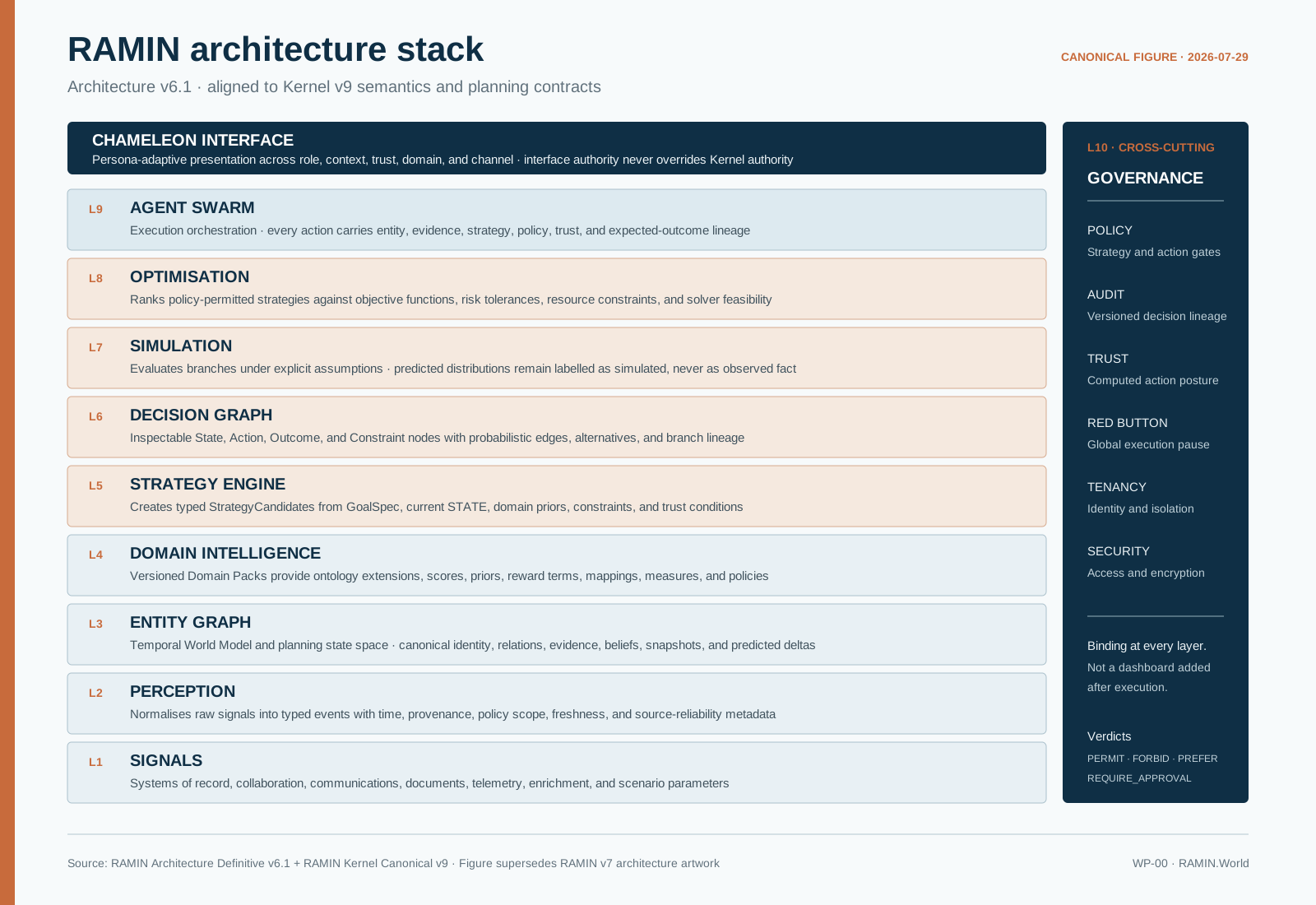
Ten layers. Governance across all of them.
Architecture v6.1 defines Signals through Agent Swarm as operational layers, with Governance spanning policy, audit, trust, security, tenancy, and the Red Button.
CANON · PLANNING TIER
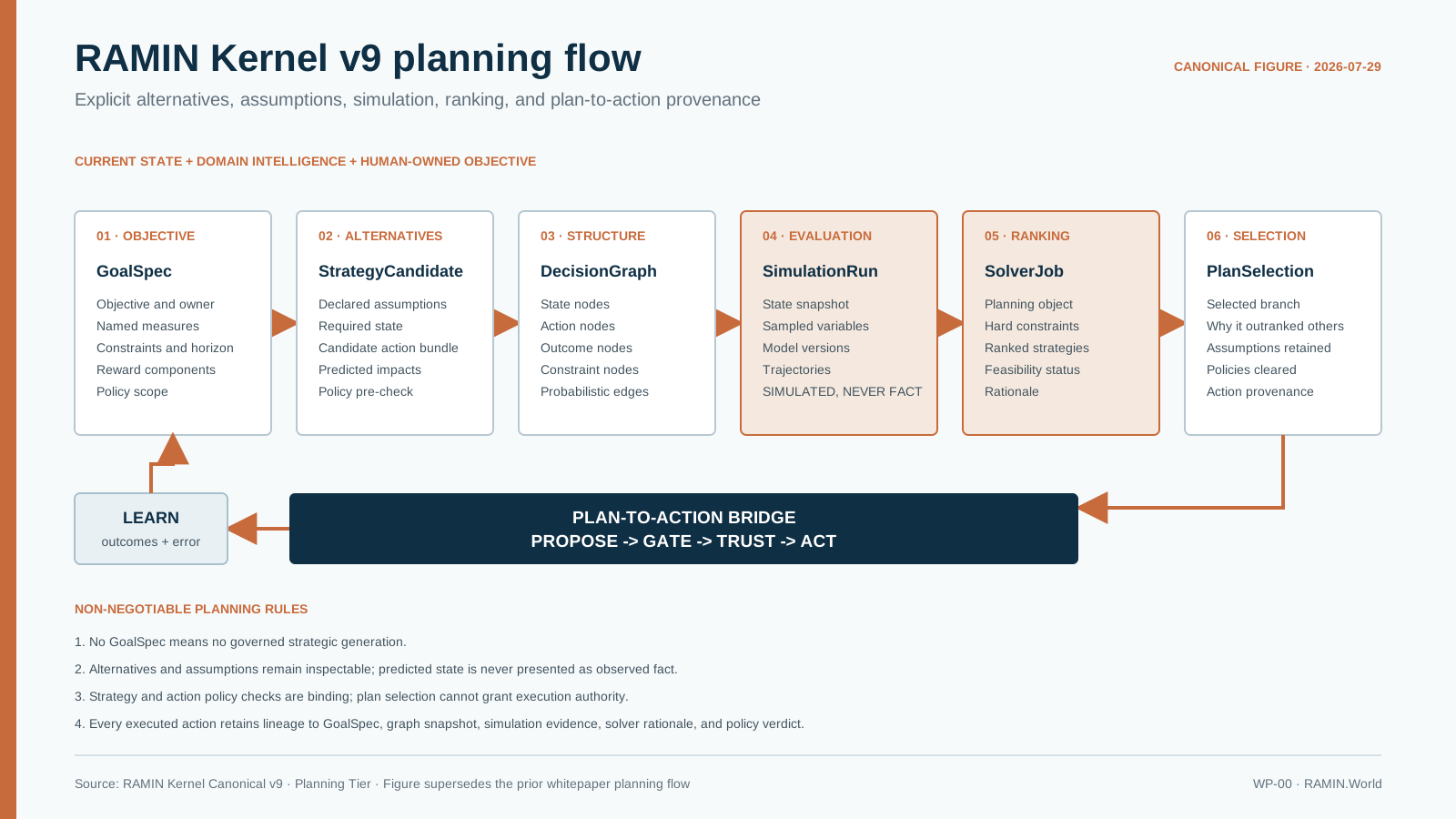
Planning is explicit. Authority is not inferred.
GoalSpec, alternatives, DecisionGraph, simulation, solver ranking, and PlanSelection remain inspectable. Selection still flows through PROPOSE, GATE, TRUST, and ACT.
CANON · EXPLANATORY SUMMARY
Every action crosses every ring.
No action reaches the kernel without crossing every ring; no decision leaves without writing back to every ring. The Red Button bounds them all.
- Action
- Audit
- Trust
- Policy
- Kernel
CANON · KERNEL V9
Seven primitives.
Not features. The irreducible minimum needed to externalise intelligence into an operating system. Each one a first-class part of the kernel, not an add-on. Remove one, and it is no longer an intelligence engine. It is sophisticated automation.
- State. The world model. Live, resolved: every entity and truth across all systems.
- Belief. Probabilistic assertions. Evidence, confidence intervals, provenance.
- Confidence. Continuous calibration across every belief and action class. Trust measured, not assumed.
- Policy. Constitutional constraints. They prune the planning space before optimisation begins.
- Action. Typed, bounded operations routed through the trust model. Proposable, reviewable, reversible.
- Learning signal. Every outcome links to a reward vector and override data. The kernel improves perpetually.
- Trust. Per-domain, per-action-class records. Earned through measured outcomes; auto-revoked on deterioration.
Tools plateau. Substrates compound.
A tool advantage can be matched by anyone who buys the same tool. A substrate advantage compounds with every loop cycle run. The longer it runs, the further ahead it gets.